

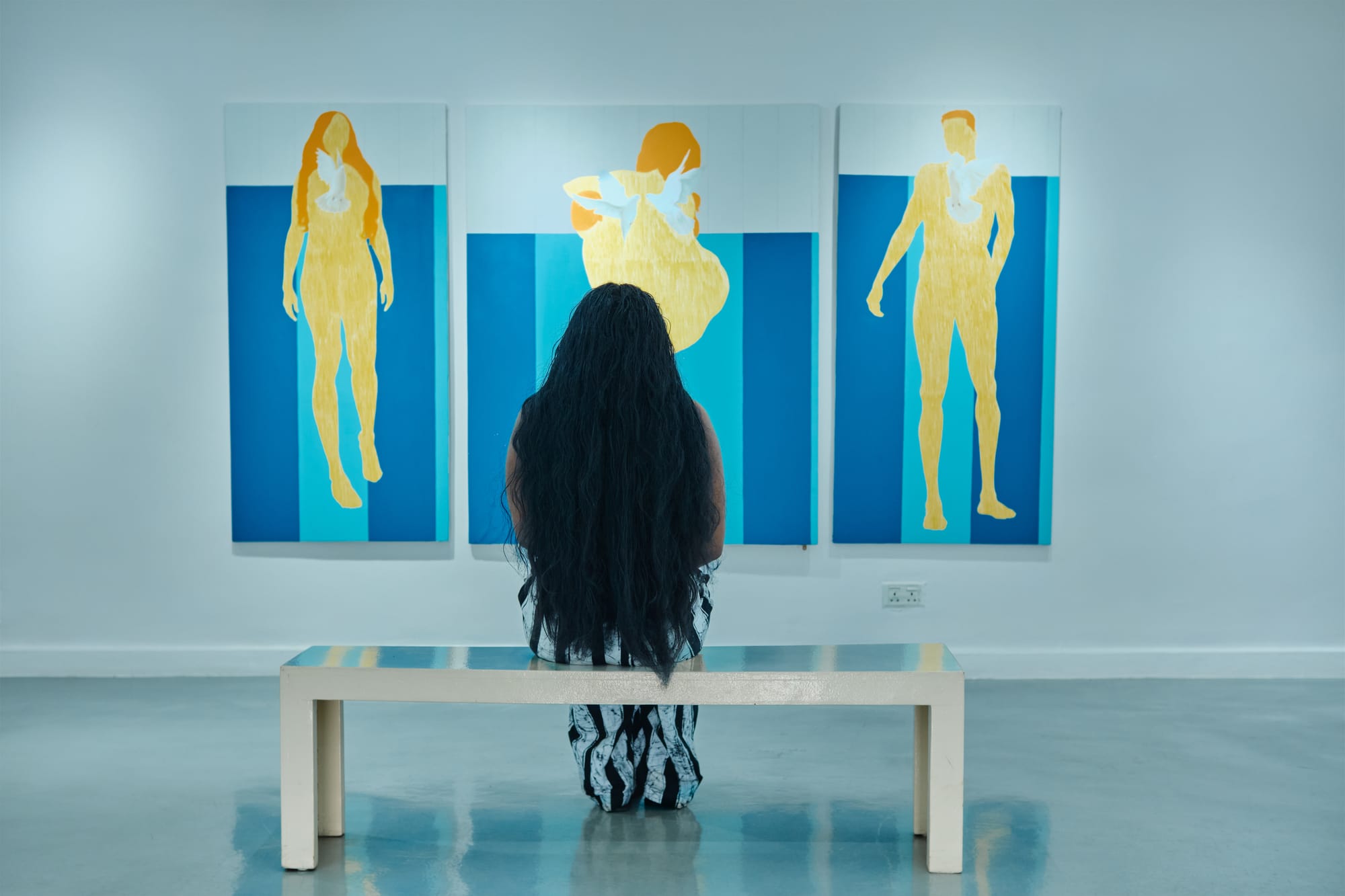
When Nigeria became independent in 1960, it inherited systems. And it built more, quickly.
There was a parliament, a constitution, a civil service designed to run a new country. There were courts, a legal code, a Central Bank that had been set up two years earlier. There were schools that became federal schools, hospitals that became teaching hospitals, marketing boards, roads, a civil aviation plan. The political and bureaucratic house was built. However imperfectly, it existed. You could walk into it and know where to go.
That did not happen for art.
No national system was built to collect, price, store, insure, or archive contemporary Nigerian work. No network of public galleries in every state capital. No clear patronage law. No bank product for artists whose income comes in lumps. Independence gave Nigerians political freedom and it gave the state administrative tools. What it did not give the creative field was an infrastructure to live in.
That is why the house in the heading matters. For visual art, people have had to build the house themselves, brick by brick, after the flag was raised.
Adenrele Sonariwo built one of those houses.
She returned to Lagos around 2010 after accounting at Howard University, four years at PWC in the United States, an MA in Multimedia Communications and a curating certificate in London. She grew up in a culturally rich home, but like most families then, hers wanted a stable career first. She did the stable thing. Then she came back to what she had always seen.
She first tried a pop-up art school. It did not hold. In February 2015 she opened Rele Gallery on Thompson Street, Ikoyi.
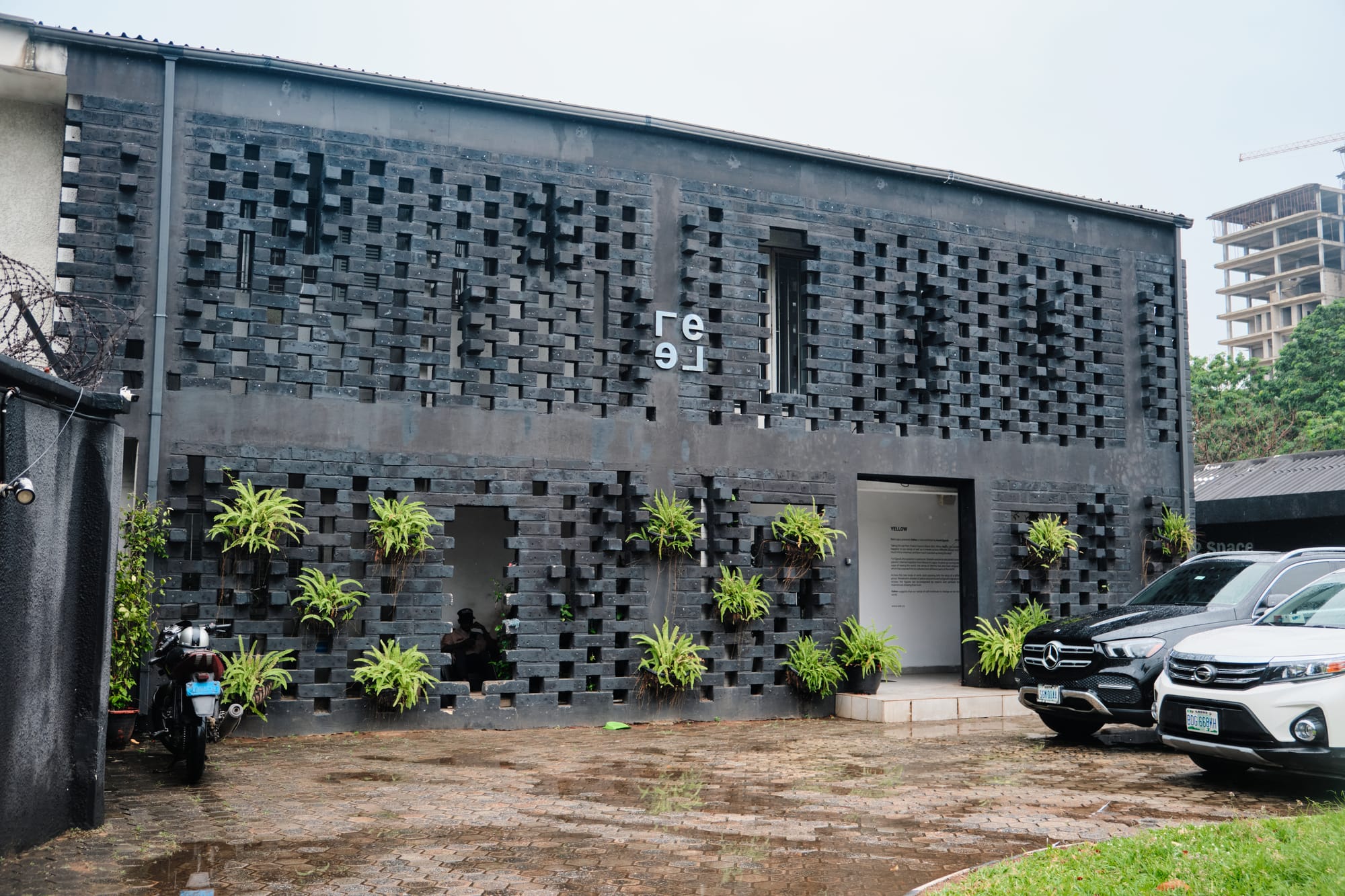
"There weren't a lot of galleries at the time," she says.
In a country of over 180 million people at that time, with painters working in Yaba, Nsukka, Zaria, Port Harcourt and Lagos, that fact tells you what was missing. Music had distribution. Film had a market. Visual art had artists, but not enough rooms to hold their work. No consistent chain from studio to gallery to collection to museum to archive.
Rele became one of the first rooms where a young Nigerian artist could be seen, priced and taken seriously on a daily basis, not just during a biennale or a fair. The work before any sale could happen was education. Who is this artist, what are they trying to say, why will they matter in five years, why should you trust this gallery's eye. In an economy where institutions do that work, a gallery can focus on showing. Here, it had to teach as well.
That takes time.
"It took a certain level of consistency," she says. "Building the brand, allowing collectors to trust us, to trust the taste, to trust the artists that we were bringing in."
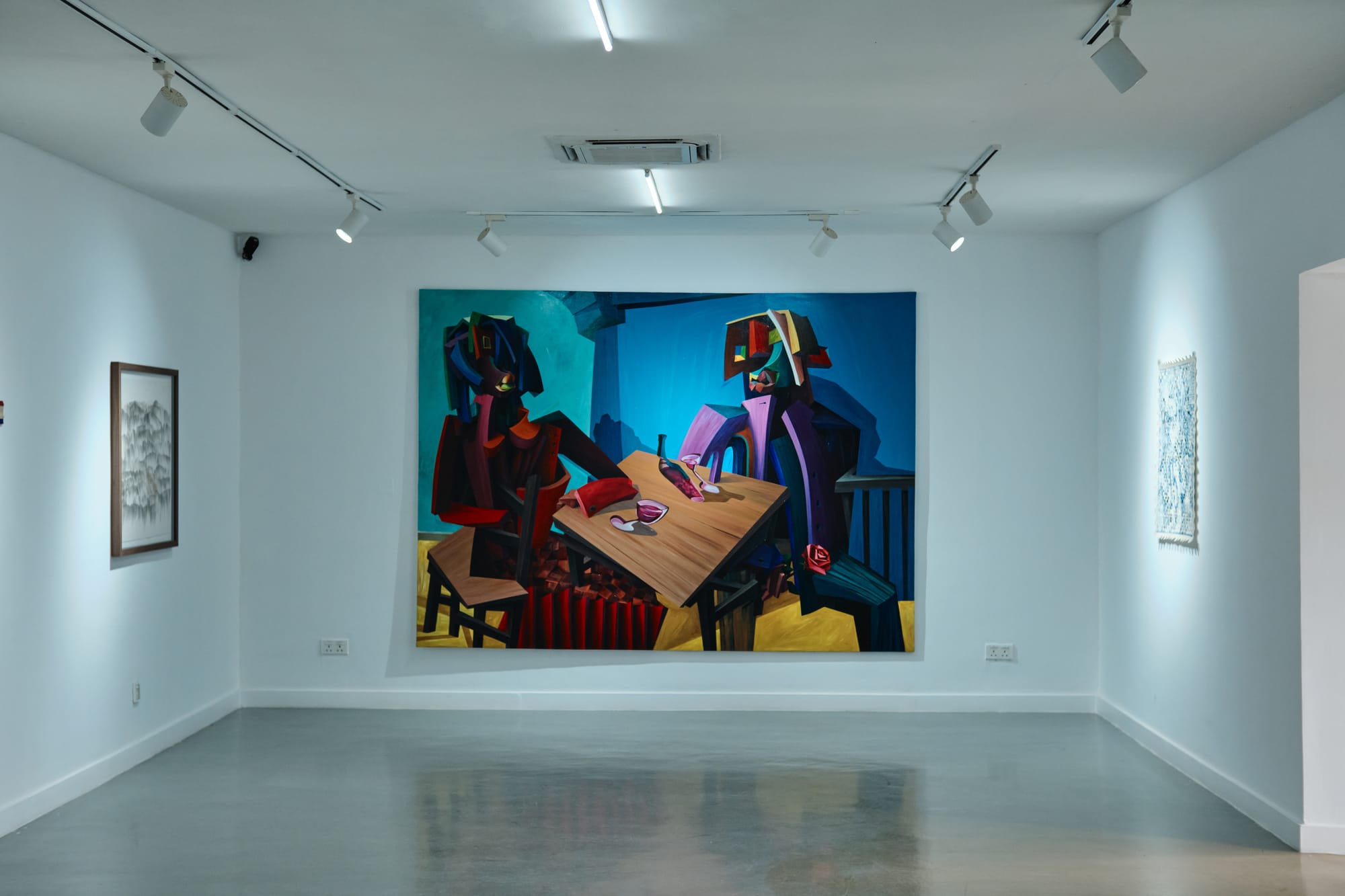
Consistency here means staying open for 24 months when you are not profitable, paying rent and diesel and staff and shipping, because if you close, trust resets. That is the difference between the political house independence built and the creative house it did not. The civil service was funded to stay. Galleries had to fund themselves to stay.
Adenrele does not talk about that period as suffering. She talks about it as building.
"I really don't like to see challenges, right? I just saw all that as an opportunity to build something and that's what we did," she says.
Her accounting training was not a side detail to her curating, it is key to the operating system that has kept the gallery open for more than a decade.
"My accounting background plays a key role because I look very closely at the numbers, making sure that we can be sustainable and we can endure through those cycles, regardless of what the economy is saying," she says.
That discipline matters because the financial problem for artists in Nigeria is not whether art can pay. That question is settled. Adenrele knows artists who are breadwinners in families of doctors, who buy land, pay school fees, pay hospital bills. She tells a story about a woman artist with several doctor siblings. When their mother was ill and the bill was large, the only child who could pay it at once was the artist. Not because doctors do not earn, but because that artist had built a real business.
The problem is how to make that income last. A salary gives you a small amount every month. Art gives you a large amount in one stretch and then nothing for months. Without structure, without a plan for the lean months, talent alone will not keep the doors open. That is the financial literacy gap independence left behind. The banks independence built were not designed for this kind of income.
And there is a wider gap her story makes visible. After independence, Nigerian art got its language. The Zaria Art Society and figures like Bruce Onobrakpeya argued that Nigerian art did not have to copy Europe. That gave us a foundation.
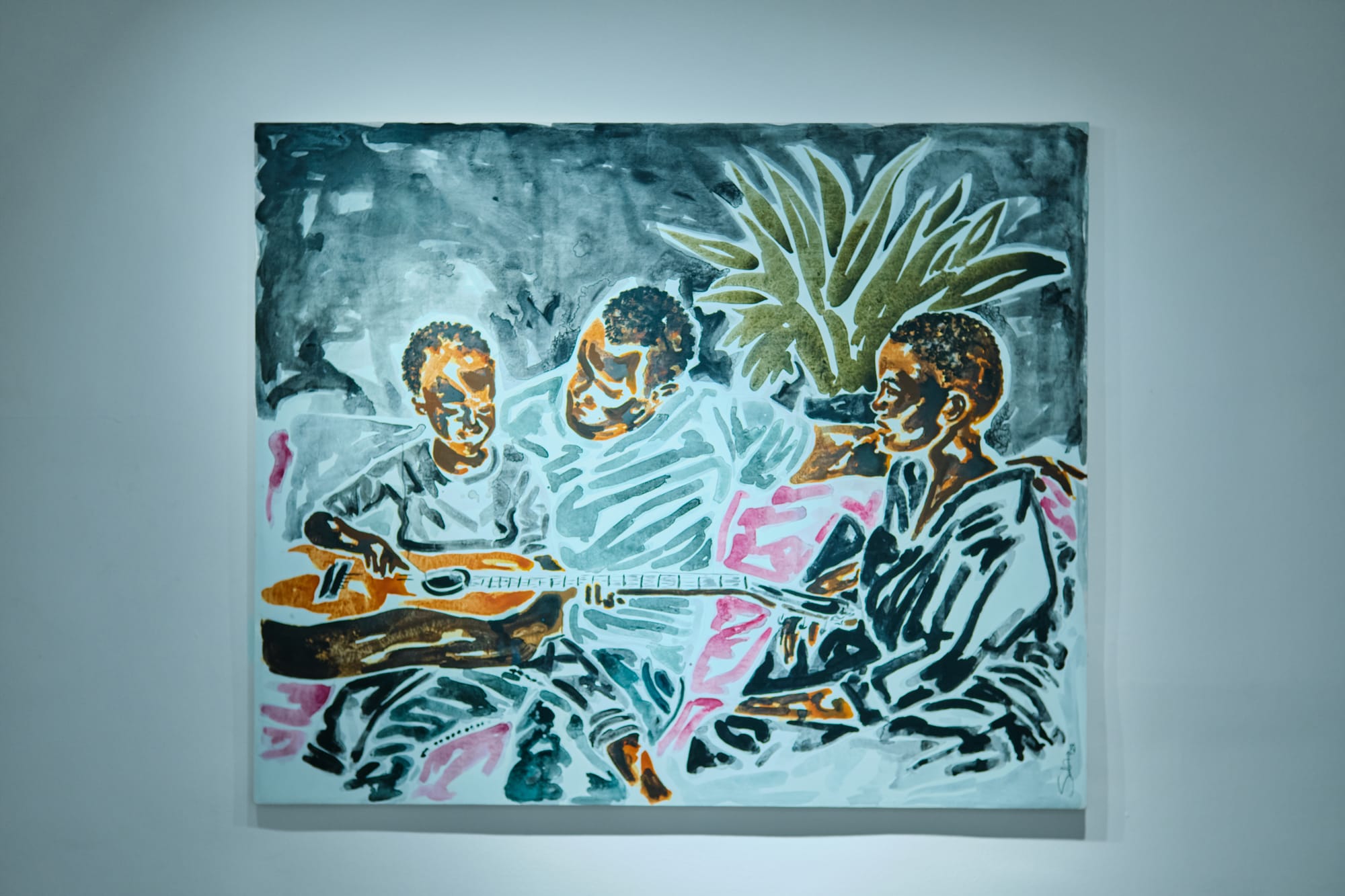
Later, fairs like ART X Lagos and patrons like Kavita Chellaram and others gave that language a market and an audience that comes to Lagos once a year. What Adenrele built is the everyday house in between — a place that stays open in March and August, where a 23-year-old with no exhibition history can get mentorship, a contract, and a way to think about a career.
But even that house shows what is still missing.
"We still need institutions. Those institutions validate the work that the visual artists do," she says.
She means museums run properly, with budgets and storage and curators, not as afterthoughts. Spaces that keep work in Nigeria and give artists a reason to stay, that tell a young painter their work does not need to be blessed in London or New York before it matters here. She also means patrons in the true sense. A collector buys what they like. A patron funds work before it is sellable — research, travel, materials, time to fail. That is how important work gets made.
That is why she started Young Contemporaries through Rele Arts Foundation. Each year a small group of emerging artists receive grants, mentorship, residencies and a final exhibition. Around that, she wants to see more of the invisible labor that makes an economy: managers who understand artists, lawyers who understand intellectual property, financiers who understand lumpy income, digital archives built here that can tell and validate our own stories without waiting for outsiders.
She uses AI in the gallery's operations because it makes admin faster. She does not think it can make real art. AI aggregates what already exists. Art comes from a person's lived experience, their materials, their hand. You can feel when a statement was written by AI now. The rhythm is too smooth. For artists who work with clay, wood, textile, oil and bronze, the hand cannot be faked.
If you go back to the beginning, the contrast is clear. Independence gave Nigeria political systems that survived and were built upon — a central bank, a civil service, schools, courts. The arts did not get that parallel building. So individuals built it. Adenrele came home — Rele means to come home in Yoruba — and built a house where Nigerian art could live, be stored, argued over, sold and taught. She built it with an accountant's discipline and a curator's eye.
What independence gave was permission. What builders like her gave is the place where that permission can actually live. After the flag was raised, someone still had to build the house. She did.

